![keeping the realistic image and the PropertyOps Post identifier unchanged. Let's apply that semibold font to the full layout generated-image.png I meant the semibold serif treatment generated-image.png Now publish the final draft of the brief to Sanity. I will upload the image Create the final ResiHome brief as a Sanity draft in PropertyOps production, without an image for you to upload? text {"projectId":"cypelnwv","dataset":"production","documents":[{"type":"article","content":{"title":"ResiHome to manage SoLiv Panama City townhomes","slug":{"_type":"slug","current":"resihome-to-manage-soliv-panama-city-townhomes"},"dek":"ResiHome will manage Southern Waters Capital’s new Florida rental community, with a public grand opening scheduled for November 16.","soWhat":"Track ResiHome’s new management assignment as SoLiv Panama City begins leasing ahead of its scheduled November 16 opening.","contentType":"news","beat":{"_type":"reference","_ref":"beat-operations-amenities"},"sectors":[{"_key":"sfr","_type":"reference","_ref":"sector-sfr-btr"}],"authors":[{"_key":"news","_type":"reference","_ref":"d4765a47-dc48-4f4d-8a6a-4ac50f55226f"}],"publishedAt":"2026-11-06T22:45:00Z","body":[{"_key":"p1","_type":"block","style":"normal","markDefs":[{"_key":"source","_type":"link","href":"https://www.prnewswire.com/news-releases/resihome-partners-with-southern-waters-capital-to-manage-new-build-to-rent-community-in-panama-city-fl-302925297.html"}],"children":[{"_key":"s1","_type":"span","marks":[],"text":"ResiHome has been selected to manage SoLiv Panama City, a new build-to-rent townhome community developed by Southern Waters Capital in Panama City, Florida, according to the company’s "},{"_key":"s2","_type":"span","marks":["source"],"text":"November 2 announcement on PR Newswire"},{"_key":"s3","_type":"span","marks":[],"text":"."}]},{"_key":"p2","_type":"block","style":"normal","markDefs":[],"children":[{"_key":"s4","_type":"span","marks":[],"text":"The community at 2316 Fortune Ave. is leasing three-bedroom townhomes with two-and-a-half bathrooms. ResiHome will provide property management services, including leasing technology, maintenance and reporting."}]},{"_key":"p3","_type":"block","style":"normal","markDefs":[],"children":[{"_key":"s5","_type":"span","marks":[],"text":"A public grand opening is scheduled for November 16. Executives from both companies said they expect to work together on additional communities, though the announcement did not identify other properties."}]}],"noteToEditors":"Final brief. User will upload the header image. Leave as draft until image is added; publication requires a separate publish action."}}]} Reply yes to proceed or no to cancel. yes Saved in Sanity as a draft titled “RClipboard and pen on a desk overlooking residential buildings, with the heading “Management contracts” and PropertyOps Post branding.](https://cdn.sanity.io/images/cypelnwv/production/5db82f438cdf0b41f0a420d33f3f800436ae6ee9-1672x940.png?w=1100&auto=format)
ResiHome to manage SoLiv Panama City townhomes
ResiHome will manage Southern Waters Capital’s new Florida rental community, with a public grand opening scheduled for November 16.


OperationsAnalysis
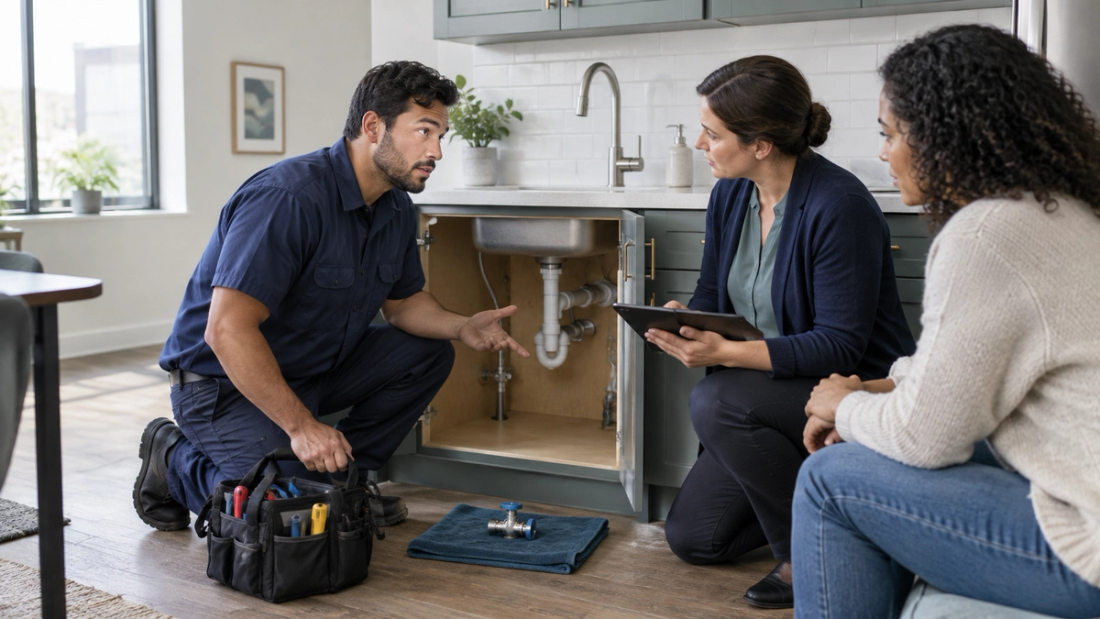
A failed water heater puts warranty records to the test. Before approving the estimate, property managers need to know what is covered and what the property will still pay.
So what: Check one recent replacement. Confirm that staff could find the applicable warranty, verify its terms and track any claim or credit through completion.

When a water heater fails, the property manager needs to get service restored. Finding the installation invoice is unlikely to be the first priority.
But that invoice may help establish whether the equipment is still covered. The warranty may also require approval before work begins, limit who can perform the service or exclude much of the contractor’s estimate.
By the time someone asks, “Isn’t this still under warranty?” the team may already be arranging a replacement.
Consider a hypothetical apartment community where the maintenance supervisor has the serial number but cannot find the installation date. The construction closeout files are somewhere on a shared drive. The employee who received them has left. The contractor needs an answer, and residents need hot water.
The manager cannot leave residents waiting while staff search old files. Nor can the manager confidently budget for a warranty claim that nobody has checked.
This article focuses on manufacturer equipment warranties. Separate contractor workmanship warranties and service agreements need their own review.
“Under warranty” can mean less than the person approving the invoice expects.
One A. O. Smith commercial water-heater warranty provides three years of coverage for qualifying tank leaks and one year for qualifying part failures. It excludes service and labor, shipping, delivery, installation and handling costs. Those terms belong to that particular warranty, not every water heater the manufacturer sells.
Under those terms, supplying a replacement tank would not settle the installation bill.
Before approving nonemergency work, the manager should ask the contractor to separate the potentially covered equipment or component from the charges the property would pay. If coverage has not been confirmed, the estimate should not treat it as a credit already secured.
Dates need checking, too. The same warranty uses the installation date to establish coverage, or the manufacture date if installation cannot be verified. Replacement products and parts receive only the unexpired portion of the original warranty. A recently replaced tank may therefore have less coverage remaining than its age suggests.
The installation invoice and earlier claim records can answer questions that a serial-number photograph alone cannot.
Downloading a warranty from the right manufacturer is not enough. Staff still need to establish whether it applies to the model, use and owner involved.
A. O. Smith’s warranty for specified gas tankless models, for example, distinguishes between single-family or multifamily domestic hot-water applications and commercial or centralized multifamily applications. It also requires manufacturer authorization for warranty claims and service.
That matters for an operator managing both individual rental homes and apartment buildings with central systems. Staff should not assign the same coverage to equipment simply because the brand matches.
The document also limits coverage to the original retail buyer at the original location and states that it is not transferable. A buyer may receive a complete set of warranty documents at acquisition and still be unable to claim under those terms.
Residential HVAC coverage warrants similar care. Carrier’s residential warranty guide describes enhanced parts coverage tied to registration and original-homeowner eligibility, with jurisdictional exceptions. It directs users to the equipment’s warranty certificate for complete terms. A rental operator needs to verify eligibility rather than rely on the headline coverage offered to homeowners.
These examples do not establish one rule for rental properties. They show what staff need to check before relying on a warranty in a repair decision.
At construction closeout, a folder can look complete to the person delivering it and still be difficult for maintenance staff to use.
The federal Unified Facilities Guide Specification for closeout submittals offers a useful reference. Its warranty-management provisions call for equipment names, model and serial numbers, installed locations, terms, start dates, maintenance requirements and service contacts. It anticipates use by maintenance personnel who may be unfamiliar with the construction contract.
Private apartment properties are not automatically subject to that specification. Operators can, however, use its approach to test a handoff.
Pick several installed assets. Ask the incoming team to find the warranty, establish when coverage began and identify the service contact. If the records cannot answer those questions, send back a specific request for the missing information.
Use the same test during an acquisition or management transition. Record whether ownership changed or only the managing agent, then check the relevant terms. Neither continued coverage nor loss of coverage should be assumed.
A proposed warranty record does not need to be elaborate. It needs to give the employee handling a failure enough information to act.
For significant warranted equipment, retain:
This is an operating checklist, not a list of documents every manufacturer requires.
The records can sit in an approved document repository rather than inside maintenance software. What matters is whether the asset record gives staff a reliable way to reach them. A folder called “Warranties” is of limited help if nobody can tell which certificate belongs to which piece of equipment.
Once the equipment and terms are identified, confirm how service must be arranged.
The A. O. Smith tankless warranty cited above requires manufacturer approval for claims and warranty service and excludes damage from unauthorized repairs. That does not mean every repair by another contractor is automatically uncovered. It means staff need to read the applicable instructions before authorizing work on the assumption that it will be reimbursed.
For nonemergency repairs, assign someone to contact the manufacturer or warranty administrator and record the response. Give the approver a clear account of what appears covered, what remains uncertain and what the property would pay.
Urgent failures cannot always follow that sequence. Protect residents and property, document the condition and contact the appropriate service or warranty representative as promptly as circumstances allow. Record why immediate work was necessary, without promising reimbursement before coverage is confirmed.
A completed repair does not establish whether a claim was accepted or a credit arrived.
Name the person responsible for following it through. Maintenance may supply photographs and the diagnosis, management may coordinate approval, and accounting may track the credit. Someone still needs to know when the claim is finished.
Update the asset record after a replacement, including the new equipment details and the coverage remaining. Otherwise, a later manager may see the replacement date and assume a fresh warranty began.
Before undertaking a portfolio-wide cleanup, review one recent replacement. Could staff locate the applicable terms? Did anyone check authorization requirements? If the invoice anticipated a warranty credit, did the property receive it?
That review gives the team a manageable place to start. It also shows whether “under warranty” was supported by records or simply repeated until the invoice arrived.
ResiHome will manage Southern Waters Capital’s new Florida rental community, with a public grand opening scheduled for November 16.
Treplus, Greystar, United Plus and Sparrow Living show how leasing, staff training and resident participation shape active-adult property operations.
Jesse Wright explains who owns follow-up after an incomplete repair, when residents should hear from the team, and how to keep delayed work orders from falling through the cracks.